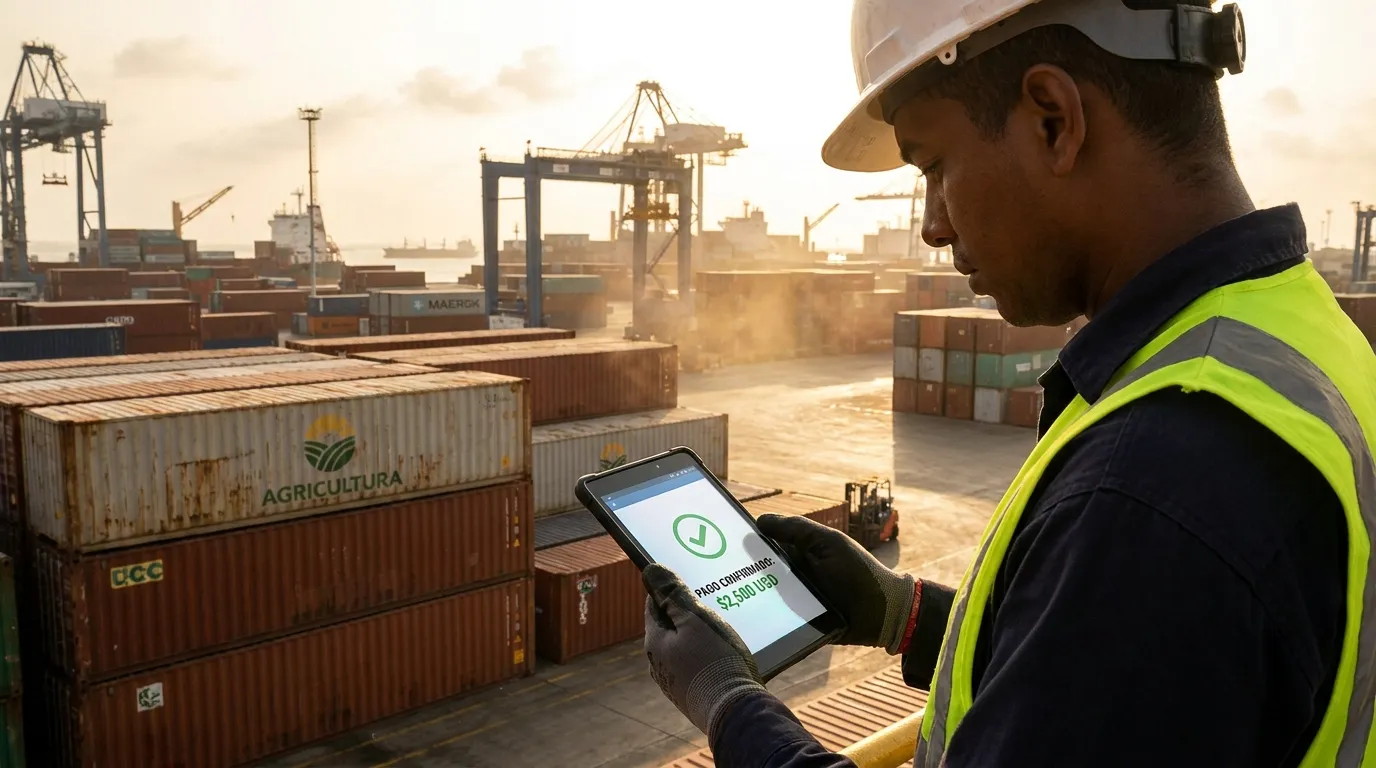
Know what you’ll receive before you change
You closed the deal on one number. But when the currency change happens, a different number lands in your account. You planned your margin on a figure you never really saw.
It should work the other way. You see the firm number before you give the order, and that number is what moves. You decide with the figure in your hand, not weeks later when it is too late to fix.
You see the firm figure before you give the order. No guessing, no waiting to find out what landed.
The currency change is one clear step in your trade, not a black box that hands you a smaller number at the end.
Your money is only in transit, watched the whole way. It comes in and goes straight out to where it belongs.
How fast depends on the corridor, and you know that up front too.
This is for food businesses that import or export and move 25,000 USD or more per operation. You could be sourcing coffee, sugar, grain, fruit or meat, and your buyer or supplier could be on any continent. Wherever you sit, the problem is the same: your trade is priced in a currency that is rarely your own.
That is not a small detail. In U.S. trade, the share of transactions invoiced in dollars never fell below 94.7 percent between 2016 and 2024, and for foods, feeds and beverages it sat near 93 percent, according to the U.S. Bureau of Labor Statistics. When the number that governs your deal is set in a currency you don’t control, knowing that number before you change is what protects your margin.
If that sounds like your operation, you are in the right place. Open your account → · See how the currency change fits your whole trade.
The number you closed is not the number that lands
You agree a price with your buyer. Everyone shakes hands on it. Then the currency change happens somewhere you can’t see, and the amount that reaches you is smaller than the one you closed. Nobody told you it would be, because nobody showed you the exact amount you’ll receive from abroad before the change went through.
This is the quiet leak in cross-border food trade. The deal looks solid on paper, but the figure you actually keep is decided after you’ve already committed. You find out when it is too late to renegotiate, reprice, or walk away. The problem is not that money moved. The problem is that you never saw the number first.
You see the firm number before you give the order
Here is how it should work, and how it works with Trilla: you know what you’ll receive before you change, and that figure is the one that moves. You see it in firm, you approve it, and the change runs on the number you already accepted. No gap between the deal and the deposit.
That matters because your trade is priced in a major currency while you plan your margin in your own. The Bank for International Settlements notes that international trade is invoiced in a dominant currency, most often the dollar, even though businesses judge their cash flow in the money they live in. So you know exactly how much you’ll receive in your terms, before you commit, not after. We review both sides of the operation up front so the number you see is the number that lands.
See how this sits inside your whole currency change.
Why the smaller exporter or importer is the most exposed
A large trader has a treasury desk that watches every rate and a finance team that models the change before it happens. A family food business shipping a few containers a season does not. You are running the harvest, the cold chain and the buyer relationship at once, and the currency change is one more thing decided by someone else, on terms you only see afterward.
That is why it pays to know the cost before the currency exchange on your side of the deal. Not the cost the market sets in the abstract, but the real cost on this operation, in your money, before you say yes. When you can see that, a thin margin stops being a gamble and starts being a number you can plan around. Think of a small coffee or fruit exporter who agreed a price months before the harvest ships. By the time the goods cross the border and the change runs, the figure they planned on can drift, and there is no desk in the back office to catch it. Seeing the number in firm before the change is the closest thing that operator has to that desk.
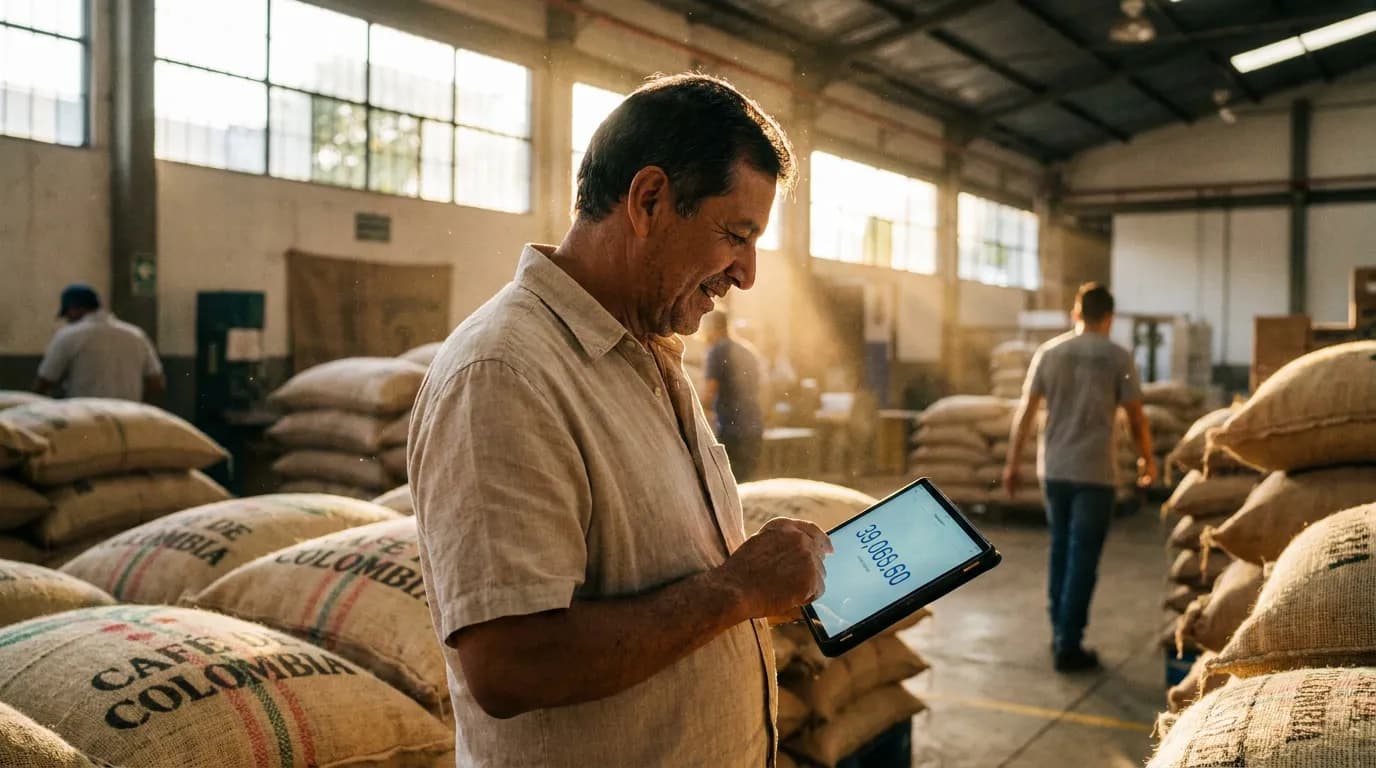
Decide with the number in your hand
When you know the final figure before you commit, the whole operation changes shape. You can price your next shipment knowing your real take. You can tell your buyer yes or no on solid ground. You can protect a margin that was always thin to begin with, because you are working from a number that is certain, not estimated.
This is the difference between the final amount of an international payment being a surprise and being a decision. A surprise costs you after the fact, when nothing can be done. A decision you make on purpose, before the change, with the figure in front of you. That is what seeing the number first gives you: control over your own trade instead of a result you simply receive.
The number lands after you commit. By then nothing can be done.
You see the figure first and approve it on purpose. The change runs on your yes.
How it looks in your operation, step by step
It is plain to follow. No black box, no number that shifts between your yes and the deposit. If the figure ever does not work for your trade, you simply do not approve it, and nothing moves. The decision stays with you, before the money does anything at all.
You open your account and tell us the operation: what you are paying or collecting, in which currencies, for which trade.
We show you the firm number you'll receive, on your side, before anything moves.
You look at it, and if it works for your margin, you approve. Only then does the change run, on the number you already saw.
From there the money travels one clean path, watched the whole way, and reaches where it belongs. How long it takes is honest and known up front: same business day or up to 48 hours, depending on the corridor.